Industry
Banking & Finance
Client
CIMB Bank Berhad (Singapore Branch)
CIMB: Digital onboarding experience
Intro
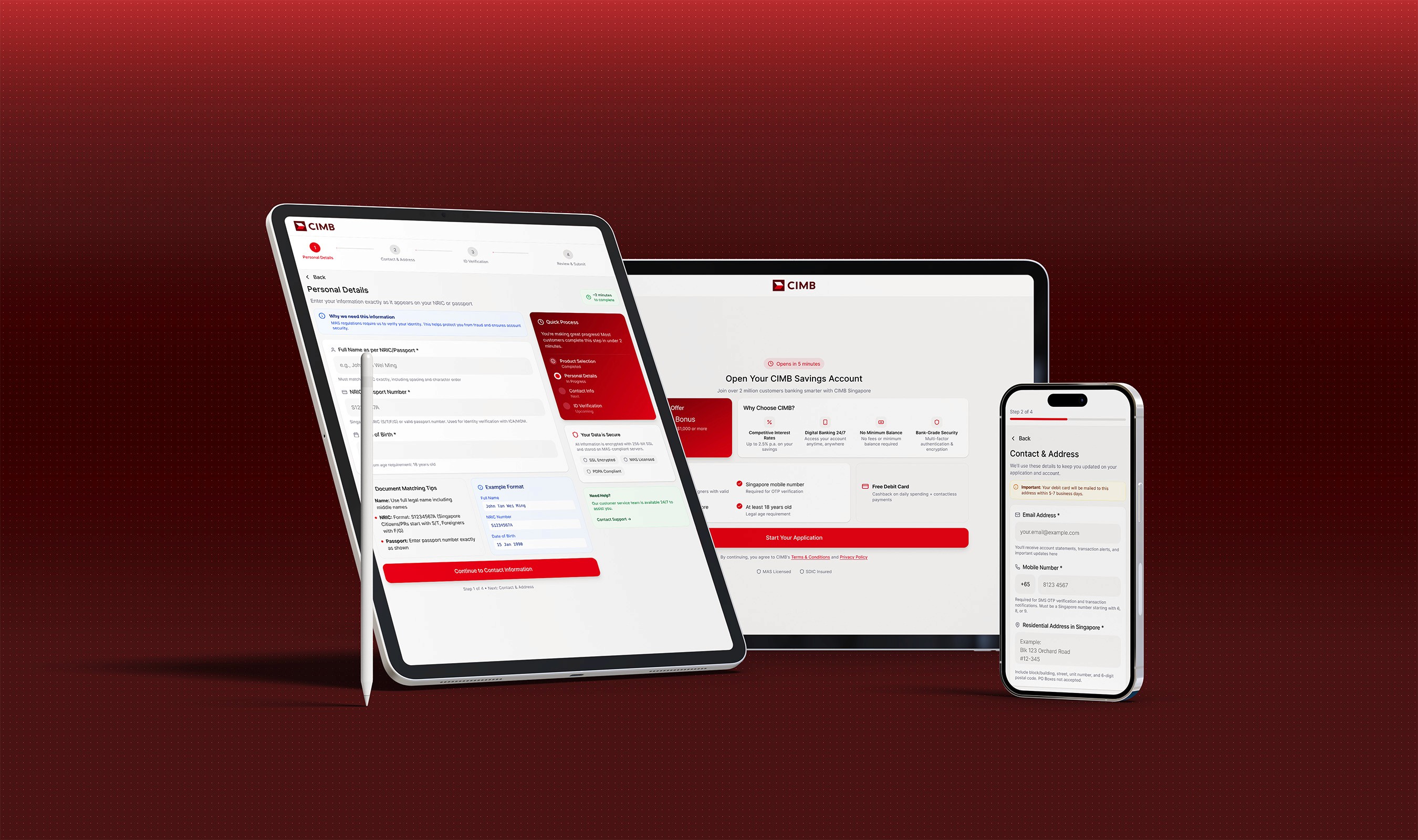
CIMB Bank is a leading ASEAN financial institution with a strong digital banking presence in Singapore. As part of CIMB Singapore’s ongoing digital transformation, the bank initiated a redesign and optimization of its digital onboarding flow. A critical customer journey that enables users to open and activate banking products entirely online.
I contributed to the UX/UI design of the end‑to‑end onboarding flow, working within CIMB’s constraints and leveraging the Backbase Design System, a global, enterprise‑grade design system used by financial institutions to ensure scalability, accessibility, and regulatory alignment.
The project focused on creating a secure, compliant, and friction‑reduced onboarding experience, while maintaining trust, clarity, and usability for a diverse user base in Singapore’s highly regulated financial environment.
Challenges
Designing digital onboarding for a bank in Singapore presents a unique set of UX, regulatory, and technical challenges.
High Cognitive Load in Financial Onboarding
Opening a bank account requires users to:
Understand product terms and eligibility
Provide personal, financial, and identity information
Complete KYC (Know Your Customer) and verification steps
Trust the digital process with sensitive data
This creates intrinsic cognitive load, especially for first‑time users or less digitally confident customers. Poor information hierarchy or unclear microcopy can easily lead to abandonment.
Regulatory & Compliance Constraints
Singapore’s banking regulations mandate:
Strict KYC and AML compliance
Transparent consent capture
Clear disclosures and audit‑friendly flows
From a UX perspective, this meant:
Mandatory steps could not be skipped
Content and structure were tightly controlled
Design had to support compliance without feeling heavy or intimidating
Balancing usability with regulation was a recurring challenge throughout the flow.
Working Within an Enterprise Design System (Backbase)
The project required strict alignment with the Backbase Design System, which offers:
Predefined components
Standardized patterns for forms, steps, validation, and states
Accessibility‑compliant tokens (colors, spacing, typography)
While this ensured consistency and scalability, it limited visual freedom, requiring thoughtful UX decisions within predefined constraints, especially for:
Error handling
Progressive disclosure
Interaction feedback
Drop‑off Risk Across a Multi‑Step Journey
The onboarding was structured as a multi‑step, linear flow, increasing the risk of:
User fatigue
Drop‑offs due to uncertainty or perceived complexity
Confusion around progress and remaining effort
Ensuring users felt guided, informed, and in control was essential to reduce abandonment.
Solution
The solution focused on clarity, progressive disclosure, and trust‑building, while fully adhering to Backbase and CIMB’s enterprise standards.
1. Structured, Step‑Based Flow Architecture
The onboarding journey was designed as a clear, sequential process, broken into logical stages such as:
Product information
Personal details
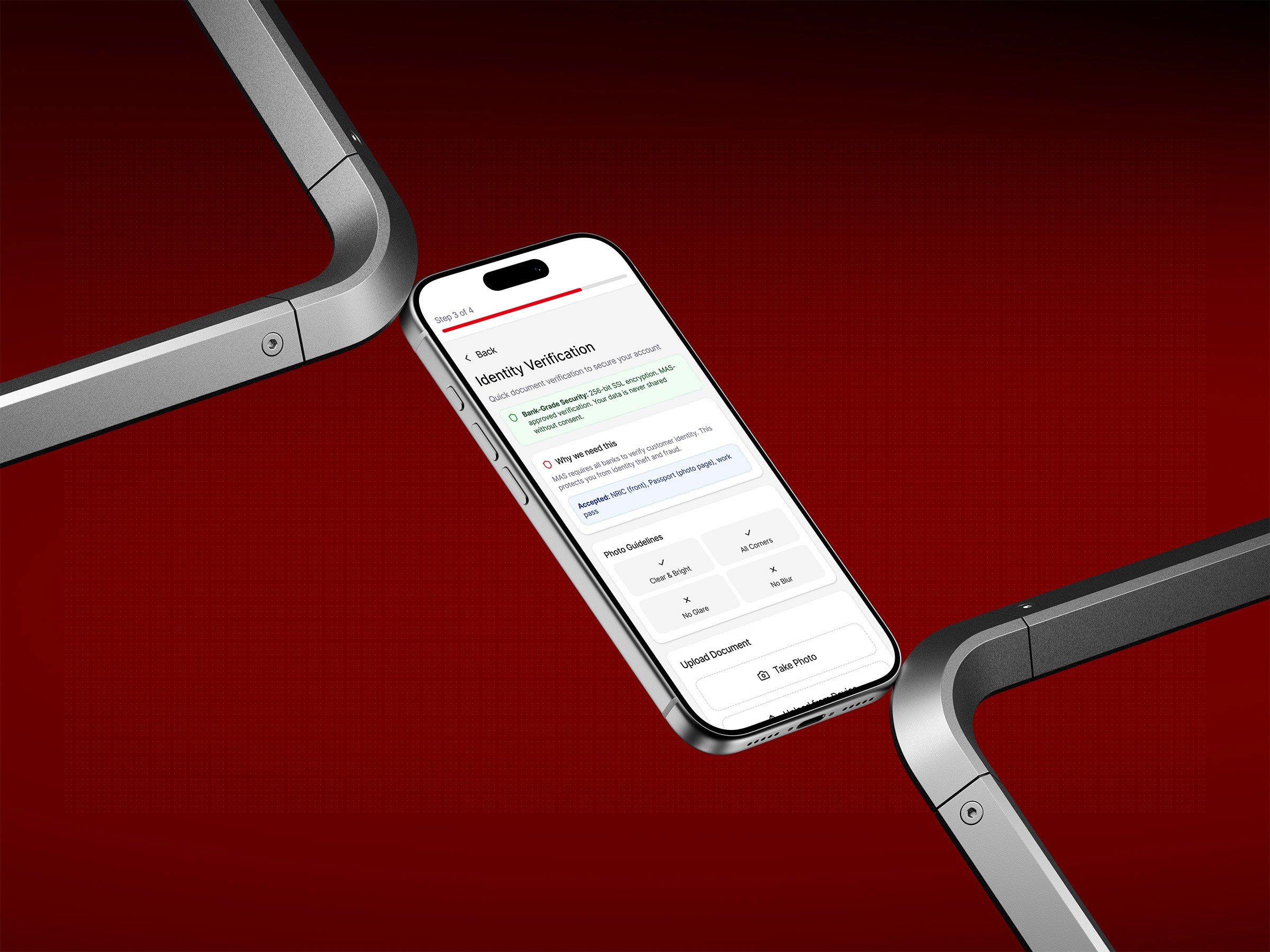
Identity verification
Review & submission
Key UX principles applied:
One primary task per screen
Clear step titles and contextual explanations
Consistent layout patterns to reduce re‑learning
This modular structure reduced cognitive load and made the journey feel achievable rather than overwhelming.
2. Progressive Disclosure of Information
To avoid overwhelming users:
Secondary details were revealed only when necessary
Helper text and tooltips were used to clarify complex fields
Legal and compliance content was visually de‑emphasized but always accessible
This approach respected regulatory requirements while keeping the interface approachable and focused.
3. Form UX Optimization Using Backbase Components
Using Backbase’s form components ensured:
Consistent validation behavior
Accessibility compliance
Predictable interaction patterns
UX enhancements included:
Inline validation to reduce submission errors
Clear error states with actionable guidance
Logical grouping of related inputs to improve scanability
These decisions helped users correct mistakes quickly without frustration.
4. Trust & Transparency Through Microcopy and UI Signals
Because onboarding involves sensitive personal data, trust was reinforced through:
Clear privacy and security messaging
Transparent explanations of why information was required
Reassurance during identity verification steps
Microcopy was intentionally:
Human and direct
Free of jargon where possible
Supportive rather than punitive in error states
5. Accessibility & Inclusivity Considerations
The design adhered to accessibility best practices supported by Backbase:
Adequate color contrast
Clear focus states
Readable typography hierarchy
Touch‑friendly interaction targets
This ensured the flow was usable across devices and for users with varying accessibility needs.
6. Scalability & Future Readiness
The onboarding flow was designed to:
Support multiple banking products with minimal rework
Scale across future regulatory updates
Integrate seamlessly with backend systems and verification services
By relying on systemized components and patterns, the design reduced long‑term maintenance costs.
Impacts
While specific business metrics are confidential, the project delivered tangible UX and organizational value:
A clearer, more guided onboarding experience
Reduced friction in form completion
Improved confidence and trust during sensitive steps
Strong alignment with enterprise design and compliance standards
A scalable onboarding foundation for future digital initiatives
From a design perspective, this project demonstrated how high‑quality UX can exist within strict financial, technical, and regulatory constraints, which is a critical skill in banking and enterprise environments.